Ask most people why they haven’t bought term insurance yet, and you’ll hear some version of the same answer: “I’ll get to it eventually” or “insurance is confusing.” That gap between knowing you need it and actually buying it is where a lot of families end up financially exposed when they least expect it.
Term insurance is one of the simplest financial products out there once you strip away the jargon, and also one of the most important. This guide breaks down what it is, how it works, and how to think about buying your first policy.
What Is Term Insurance?
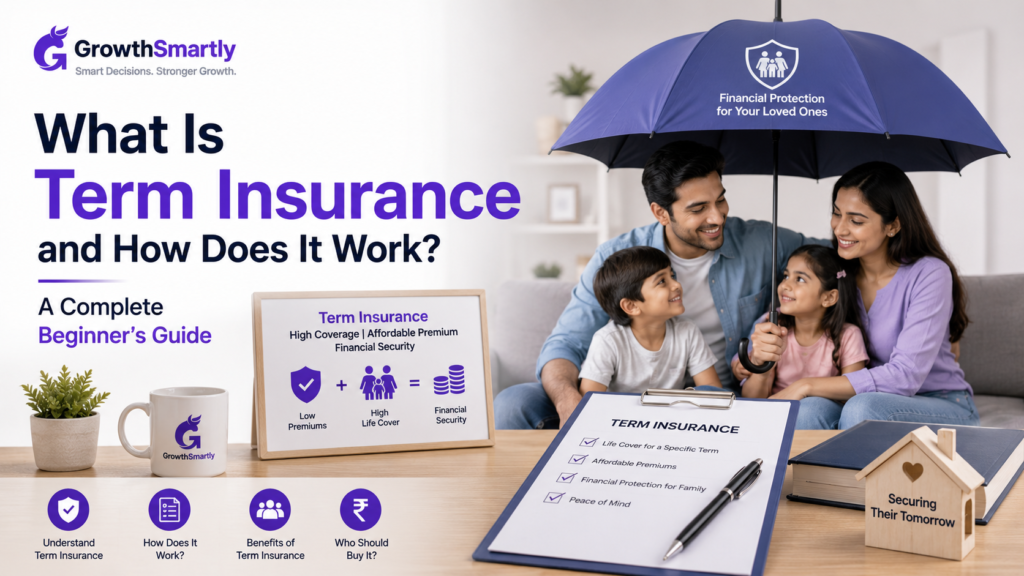
Term insurance is a pure protection plan that pays a lump sum, called the sum assured, to your nominee if you pass away during the policy term. That’s the entire premise. There’s no investment component, no maturity payout if you outlive the policy, and no bonus accumulation. It exists for one purpose: to financially protect your dependents if you’re no longer around to provide for them.
This is different from traditional life insurance plans that combine insurance with investment, often called endowment or whole life plans. Term insurance skips the investment layer entirely, which is exactly why it costs a fraction of what those combined plans charge for the same amount of cover.
How Does Term Insurance Actually Work?
You choose a sum assured, the amount your family would receive if something happened to you, and a policy term, typically ranging from 10 to 40 years depending on your age and needs. You then pay a premium, either annually, monthly, or as a single upfront payment, to keep the policy active.
If you pass away within the policy term, the insurer pays the full sum assured to your nominee, usually as a lump sum, though many insurers now offer monthly income options as well. If you outlive the policy term, there’s typically no payout and no refund of premiums paid, unless you specifically chose a Term Return of Premium (TROP) variant, which costs more but returns your premiums if you survive the term.
Why Is Term Insurance So Much Cheaper Than Other Plans?
This is usually the first thing that surprises new buyers. A 30-year-old can often get a cover of ₹1 crore for a premium of a few hundred rupees a month, while an endowment plan offering the same cover might cost several times more. The reason comes down to what you’re actually paying for.
Traditional plans bundle insurance with a savings or investment component, so part of your premium goes toward building a maturity corpus. Term insurance carries none of that overhead. You’re purely paying for risk cover, which keeps the cost low and lets you buy a much larger sum assured for the same budget.
How Much Cover Do You Actually Need?
A common rule of thumb suggests a cover of 10 to 15 times your annual income, but this is only a starting point. A more accurate approach factors in your outstanding liabilities, such as a home loan or other debt, your family’s future expenses like children’s education, and the number of years your income would need to be replaced.
Someone in their late twenties with no dependents and no loans has very different needs compared to someone in their forties with a mortgage and two children heading toward college. Reassessing your cover every few years, especially after major life events like marriage, a child, or a large loan, is worth doing rather than setting it once and forgetting about it.
Choosing the Right Policy Term
Ideally, your term insurance should cover you through your working years, or until your major financial responsibilities are expected to end. Many people choose a term that runs until age 60 or 65, while others prefer covering specific liabilities, like matching the term to a 20-year home loan tenure.
Buying term insurance early has a genuine financial advantage too. Premiums are locked in based on your age and health at the time of purchase, so buying in your late twenties or early thirties typically secures a significantly lower premium than waiting until your forties.
What Factors Affect Your Premium?
Age is the biggest factor, since premiums rise with each passing year. Health conditions, smoking or tobacco use, occupation risk, and family medical history also affect how insurers price your policy. This is why medical tests are often required for higher sum assured amounts, and why being upfront about your health history matters. Non-disclosure can lead to claim rejection later, defeating the purpose of buying the policy.
Term insurance is one of the most cost-effective ways to protect your family’s financial future, precisely because it focuses purely on risk cover without the extra cost of an investment component. Buy early, calculate your cover based on actual liabilities and future needs rather than a rough guess, and be transparent about your health details during purchase. It’s a small monthly cost for a level of security that’s hard to replace any other way.
Frequently Asked Questions
1. What is the difference between term insurance and life insurance?
Term insurance is a type of life insurance, specifically a pure protection plan with no investment component and no maturity benefit. Other life insurance products, like endowment or whole life plans, combine insurance with a savings or investment element, which makes them considerably more expensive for the same cover amount.
2. Does term insurance offer any returns if I survive the policy term?
Standard term insurance plans don’t return premiums if you outlive the term. However, a Term Return of Premium (TROP) variant is available, which refunds your total premiums paid if you survive the policy term, though it comes at a higher cost than a standard term plan.
3. How much term insurance cover should I buy?
A common starting point is 10 to 15 times your annual income, but a more accurate figure accounts for outstanding loans, future family expenses, and how many years your income would need to be replaced for your dependents.
4. Is it better to buy term insurance early?
Yes, buying early generally locks in a lower premium since your age and health at the time of purchase determine your rate. Waiting until your forties or later usually means paying significantly more for the same cover amount.
5. What happens if I don’t disclose my health condition while buying term insurance?
Non-disclosure of health conditions or lifestyle habits like smoking can lead to claim rejection at the time your family actually needs the payout. Being transparent during the application process is essential to ensure the policy serves its purpose when required.