Buying your first home is exciting, and for most people in India, it’s also the biggest financial commitment they’ll make in their lifetime. Unless you’re sitting on a large pile of savings, a home loan is how that dream turns into a set of keys. But the process can feel intimidating the first time around, full of terms like tenure, EMI, and loan-to-value ratio that nobody really explains in plain language.
This guide walks through exactly how a home loan works in India, step by step, so you know what to expect before you walk into a bank branch or open a loan app.
What Is a Home Loan, Really?
A home loan is money a bank or housing finance company lends you to purchase, construct, or renovate a property. In return, you repay the amount over a fixed period through monthly installments, along with interest. The property itself acts as collateral, meaning the lender holds a legal claim on it until the loan is fully repaid.
This is why the process involves more paperwork than, say, a personal loan. The lender wants to be certain both about your ability to repay and about the legal standing of the property you’re buying.
Step 1: Check Your Eligibility
Before applying, lenders look at a few core factors: your income, age, employment stability, credit score, and existing debt obligations. Salaried applicants typically need to show at least two to three years of steady employment, while self-employed applicants need to demonstrate consistent business income through tax returns.
Your credit score plays a bigger role than most first-time borrowers realize. A score above 750 usually unlocks better interest rates, while a lower score can mean higher rates or even rejection. If you haven’t checked your credit report recently, that’s worth doing before you start house-hunting.
Step 2: Understand How Much You Can Borrow
Lenders don’t finance 100% of a property’s value. Most home loans cover 75-90% of the property cost, depending on the loan amount, and you’re expected to arrange the remaining portion, known as the down payment, from your own savings.
Lenders also calculate your loan eligibility based on your income and existing obligations, generally ensuring your total EMIs don’t exceed 40-50% of your monthly income. This protects you from over-borrowing and protects the lender from lending to someone who might struggle to repay.
Step 3: Interest Rates — Fixed vs Floating
Home loan interest in India generally comes in two forms. A fixed rate stays the same throughout the tenure, which offers predictability but often starts slightly higher. A floating rate moves with the market and is linked to an external benchmark, meaning your EMI can rise or fall over time.
Most Indian borrowers opt for floating rates because they tend to work out cheaper over a long tenure, though this comes with less certainty about future payments. Understanding this trade-off before signing is important, since a 20-year loan can see several rate cycles.
Step 4: Understanding EMIs
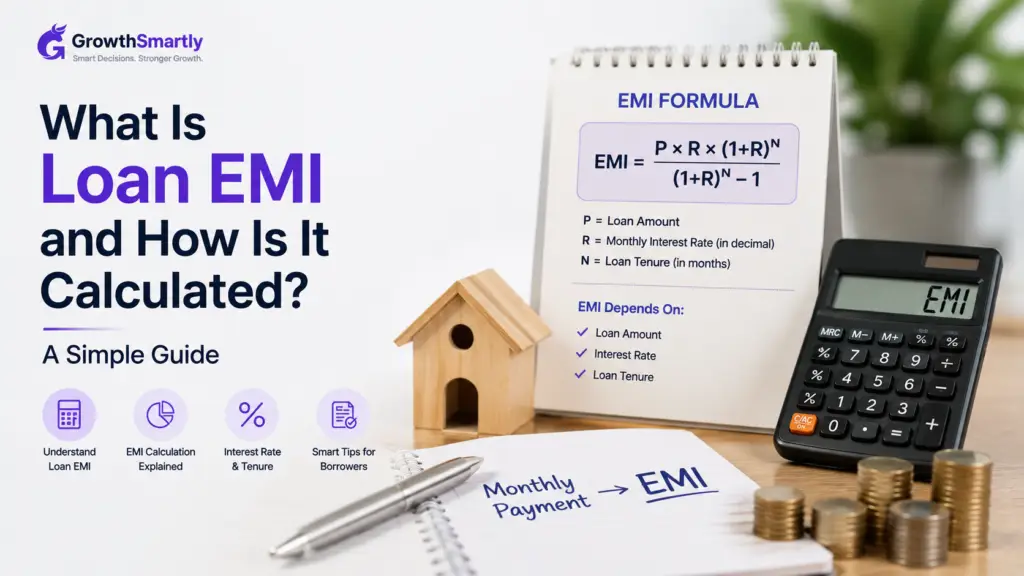
EMI stands for Equated Monthly Installment, the fixed amount you pay each month until the loan is cleared. Each EMI is a mix of principal and interest, and in the early years of a long-tenure loan, a larger portion goes toward interest rather than principal.
This is a detail many first-time borrowers miss. If you can afford to make partial prepayments in the early years, even small extra amounts can meaningfully reduce your total interest outgo and shorten your loan tenure.
Step 5: Documentation and Approval Process
Once you’ve selected a lender, you’ll need to submit documents covering identity, income, address, and property details, along with a loan application form. The lender then conducts a technical and legal verification of the property to confirm clear title and proper approvals.
After verification, the lender issues a sanction letter outlining the approved amount, interest rate, and terms. Once you complete the property purchase formalities, the loan amount is disbursed, either fully or in stages if the property is under construction.
Step 6: Tax Benefits Worth Knowing About
Home loans in India come with tax advantages that many borrowers overlook. Principal repayment qualifies for deduction under Section 80C, while interest paid qualifies under Section 24(b), subject to specified limits. These benefits can meaningfully reduce your effective borrowing cost, so it’s worth factoring them into your overall financial planning.
The Bottom Line
A home loan is a long-term commitment, often stretching across fifteen to twenty years, so understanding how it actually works before you sign matters more than chasing the lowest advertised interest rate alone. Check your eligibility honestly, compare fixed and floating options, understand your EMI breakdown, and read the fine print on processing fees and prepayment charges. A well-understood home loan is far less stressful than one you signed up for without knowing the details.
Frequently Asked Questions
1. What is the minimum credit score needed for a home loan in India?
Most lenders prefer a credit score of 750 or above for the best interest rates, though some may approve loans with scores as low as 650-700, usually at a higher interest rate or with additional conditions.
2. How much down payment do I need for a home loan?
Typically, you need to arrange 10-25% of the property value as a down payment, since lenders usually finance 75-90% of the cost depending on the loan amount and property type.
3. What is the difference between fixed and floating interest rates?
A fixed rate remains constant throughout the loan tenure, offering predictable EMIs, while a floating rate changes based on market benchmarks, which can make your EMI go up or down over time. Floating rates are more common in India and often work out cheaper over the long run.
4. Can I prepay my home loan before the tenure ends?
Yes, most lenders allow prepayment, and for floating-rate loans, there are typically no prepayment penalties. Making extra payments, especially in the early years, can significantly reduce your total interest cost.
5. What documents are required to apply for a home loan?
Common documents include identity and address proof, income proof such as salary slips or IT returns, bank statements, property documents, and passport-sized photographs. Self-employed applicants usually need to submit additional business financial documents.